
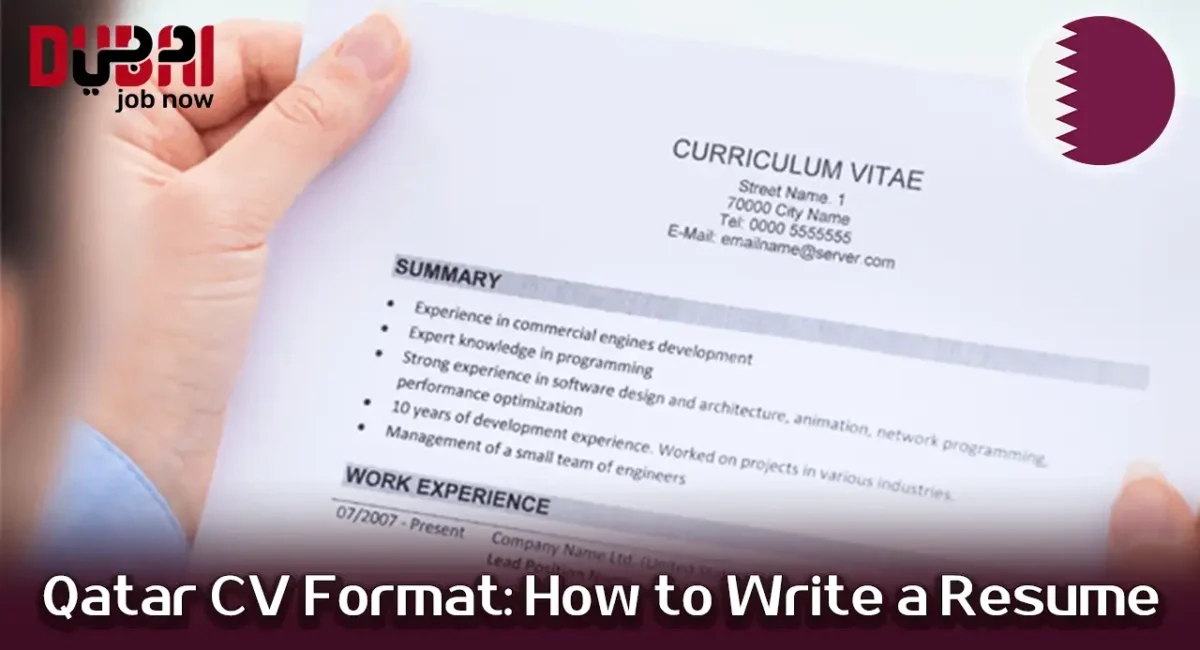
Qatar CV Format: How to Write a Resume for Jobs in Qatar
Introduction
If you are applying for jobs in Doha or elsewhere in Qatar, using the right Qatar CV format can improve how clearly employers understand your background. There is no single format that fits every employer, but expectations in Qatar and the wider Gulf market are often more specific than in some Western markets, especially around personal details, photo use, and how directly your CV matches the role.
A strong CV for Qatar should be easy to scan, tailored to the vacancy, and structured around relevant experience and measurable results. It should also stay simple enough to work well when companies use applicant tracking systems, which generally prefer clean formatting and reverse-chronological order.
What “Qatar CV format” means
When people search for “qatar cv format,” they are usually looking for a resume style that fits local employer expectations while still looking professional and modern. In practice, that often means a straightforward CV with contact details at the top, a short profile summary, key skills, work history in reverse chronological order, education, certifications, and relevant extra details such as nationality, visa status, location, or availability when those details help recruiters assess fit quickly. Regional guidance from GulfTalent highlights nationality, visa status, availability, and concise length as common Gulf-market expectations, and Qatar-based application flows such as Media City Qatar also ask candidates for nationality and visa status during application.
That does not mean every employer expects exactly the same CV. A multinational company in Qatar may prefer a lean, ATS-friendly resume with minimal personal details, while some local or customer-facing roles may accept or even prefer a photo and additional background information.
The best structure for a Qatar CV
For most job seekers, the safest and most effective Qatar CV format is reverse chronological. Start with your most recent experience and work backward. This format is easy for recruiters to review and is also the format Indeed identifies as the most ATS-friendly.
A practical structure looks like this:
1. Header
Include your full name, mobile number, professional email address, current location, and LinkedIn profile if it is updated. If relevant to the role, you can also add nationality, visa status, notice period, availability, and driving license details. These details are commonly considered in Gulf hiring contexts, especially when employers need to assess local availability quickly.
2. Professional summary
Write a short summary of two to four lines. Focus on your experience level, field, strongest skills, and the type of role you are targeting in Qatar. Keep it specific and avoid vague claims such as “hardworking professional” or “seeking a challenging opportunity.”
3. Core skills
Add a short list of role-relevant skills. Use the same language the employer uses when it matches your real background. This helps both recruiters and ATS systems understand your fit.
4. Work experience
List your jobs from most recent to oldest. For each role, include job title, company, location, and dates. Under each position, prioritize achievements over duties. GulfTalent specifically notes that many weak CVs simply repeat responsibilities, while employers are more interested in what you achieved, ideally with numbers or clear outcomes.
5. Education
Include your degree, institution, and graduation year or expected completion year. If your school or university may not be widely known internationally, a short clarifying line can help provide context. GulfTalent recommends adding brief context for lesser-known employers or institutions when regional recruiters may not recognize the name immediately.
6. Certifications and licenses
Add certifications that are directly relevant to the role. In Gulf markets, internationally recognized certifications can strengthen a CV, particularly in technical, finance, HR, safety, and operations roles.
7. Languages and additional details
If you speak Arabic, English, or other languages used in the role, include them clearly. Add driving license details only when relevant. Do not overload this section with unnecessary personal information.
Should you add a photo in a Qatar CV?
This is one of the most common questions about Qatar CV format. The most accurate answer is that it depends on the employer and the role. Bayt notes that across the GCC, a photo is not essential in many cases, but it may help in customer-facing roles such as hospitality, sales, aviation, or media. Bayt also says that photos may create issues for ATS parsing or conflict with the policies of multinational employers, so for corporate roles or large companies, leaving the photo off is often the safer choice unless the employer asks for one.
In Qatar, some employers do explicitly ask for a CV with photograph. For example, Oryx International School’s vacancy page states that applications should include a CV with photograph. That shows why a flexible approach is best: use a photo only when it fits the role, the employer requests it, or the industry still commonly expects it.
If you do include a photo, keep it professional. Use a plain background, formal clothing, and a clear headshot. Avoid selfies, filters, or overly stylized images.
How long should a Qatar CV be?
For most candidates, one to two pages is the right target. GulfTalent’s regional guidance recommends keeping the CV concise even for experienced professionals, because recruiters do not need a long document to assess fit. A shorter CV is usually easier to scan and less likely to bury your strongest points.
If you have many years of experience, focus on relevance rather than trying to document every task you have ever done. The goal is not to show everything. The goal is to show what makes you a strong match for the role you want now.
What to include for jobs in Qatar
A good Qatar CV format is not only about design. It is also about including the details employers in the market often care about. Depending on the role, that may include:
- Current location, especially if you are already in Qatar
- Visa status or sponsorship status when relevant
- Notice period or immediate availability
- Nationality, if the employer’s process or posting asks for it
- Driving license details for field, site, delivery, or sales roles
This does not mean you should crowd the top of your CV with every possible detail. Include only what helps a recruiter make a faster, more accurate decision about your eligibility and readiness.
Practical tips to make your CV stronger
Tailor each CV to the job title instead of sending the same version everywhere. Match your summary, skills, and recent achievements to the posting. Indeed recommends using keywords from the job description naturally and keeping section headings clear so ATS tools can parse the document properly.
Use plain formatting. Avoid graphics, icons, text boxes, multi-column designs, and heavy visual templates if you are applying online. ATS systems generally work better with clean layouts, standard headings, and simple structure.
Focus on outcomes, not just tasks. Instead of writing “responsible for customer service,” write what changed because of your work. Examples include improving response time, reducing errors, increasing sales, handling large workloads, or supporting a team during peak operations. That shift makes your CV more credible and more useful to employers.
Save the file as PDF unless the employer asks for Word format. Bayt advises that if you include a photo, the file should preserve alignment properly, especially when converted to PDF. A PDF also helps prevent formatting issues across devices.
In many Gulf job markets, employers prefer a clear reverse-chronological CV with concise personal and professional details, as noted in [this Gulf CV guide].
Common mistakes to avoid
One common mistake is making the CV too long. Another is pasting job descriptions instead of describing your own results. GulfTalent specifically warns against responsibility-heavy CVs that fail to show achievement.
Another mistake is attaching too many documents at the first stage. Regional guidance from GulfTalent says that sending passport copies, certificates, and similar attachments with the CV is generally not the norm and can put employers off unless those documents are requested.
Job seekers also weaken their CVs by using an unprofessional email address, inconsistent dates, vague summaries, or poor formatting. If the CV looks difficult to read, many recruiters will not spend time trying to decode it.
you can check also about : How to Get Job in Saudi Arabia
Final takeaway
The best Qatar CV format is clear, relevant, and adapted to the employer you are targeting. For most applications, that means a one- to two-page reverse-chronological CV with a short professional summary, role-specific skills, achievement-focused work history, and only the personal details that actually help your application. In Qatar and the wider Gulf market, details such as nationality, visa status, current location, and availability can be useful, but photo use should be decided carefully based on the role and company type.
A simple CV usually performs better than a flashy one. Make it easy to scan, easy to trust, and easy to match to the job. That is what gives a Qatar CV format real value.
FAQs About Qatar CV Format
Should a CV in Qatar have a photo?
Not always. In Gulf hiring, some employers and customer-facing industries may prefer a professional photo, but it is not a universal requirement. Bayt’s GCC guidance says the safest option is usually to skip the photo unless the job ad asks for one, while some Qatar employers do explicitly request a CV with photograph.
What is the best Qatar CV format for most jobs?
For most applications, the best choice is a clean reverse-chronological CV. This format is easier for recruiters to scan and is generally the most ATS-friendly because it lists your most recent experience first with clear dates and standard headings.
How long should a CV be for Qatar jobs?
In most cases, one to two pages is enough. A shorter CV is easier to read and usually performs better than a long document packed with unnecessary details. Focus on relevant experience, clear achievements, and role-specific skills instead of trying to include everything you have done.
Should I include nationality and visa status on my CV for Qatar?
In many Gulf job markets, including nationality, visa status, and availability is common practice because employers often want to assess eligibility and readiness quickly. GulfTalent’s regional CV guidance specifically recommends including nationality and also highlights details such as availability and visa-related status in the profile section.
Is a fancy resume design good for Qatar applications?
Usually not. If you are applying through job portals or company websites, a simple layout is generally better. ATS-friendly resumes work best when they avoid graphics, tables, text boxes, and complex visual elements.
Can I use the same CV for every Qatar job application?
That is not the best approach. A generic CV may still be readable, but a tailored CV usually gives you a better chance because it aligns your summary, skills, and recent experience with the exact role. Bayt’s Gulf job-market advice also stresses tailoring applications rather than sending the same CV everywhere.
Should I send certificates and passport copies with my CV?
Only if the employer asks for them. In many cases, sending extra documents too early can make your application look cluttered. It is usually better to submit a focused CV first and provide supporting documents later if requested.
What file format should I use when sending a CV in Qatar?
PDF is usually the safest option unless the employer specifically requests a Word document. A PDF helps preserve formatting across devices and reduces the risk of layout problems when your CV is opened by recruiters or hiring teams.

Leave a Comment